Overview
This section examines how Battery Energy Storage Systems (BESS) affects the electricity market by actively reshaping demand and optimizing the generation mix.
The Impact of BESS on the System
The integration of BESS significantly alters the dynamics of the DLC and the LDC by actively levelizing the demand. BESS disrupt the traditional screening curve by acting as both a "synthetic load" and a "peaking generator."
- Peak Shaving: BESS can replace expensive Peaking Stations. By charging during low-cost baseload periods and discharging during peaks, the system avoids the high variable costs of diesel or open-cycle gas.
- Capacity Firming: BESS allows intermittent renewables (Solar/Wind) to behave more like "Intermediate" or even "Baseload" stations by smoothing out volatility.
- Arbitrage: In a deregulated market, BESS captures the price delta between the bottom and top of the LDC, effectively "flattening" the curve.
With BESS vs. Without BESS
Without BESS
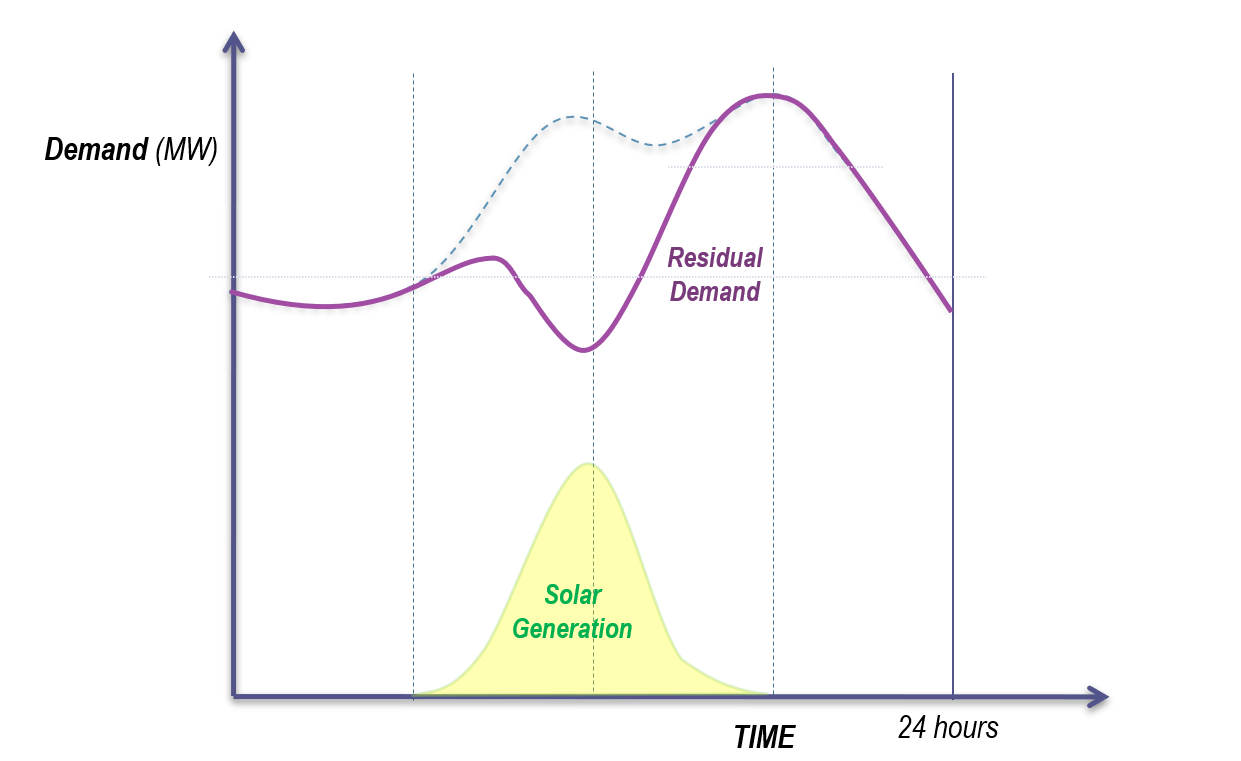
- Heavy solar generation causes prices and net demand to become highly depressed during the midday period.
- As the sun sets and the evening peak begins, the system must rely heavily on expensive peaking stations to satisfy the sudden spike in net demand.
With BESS
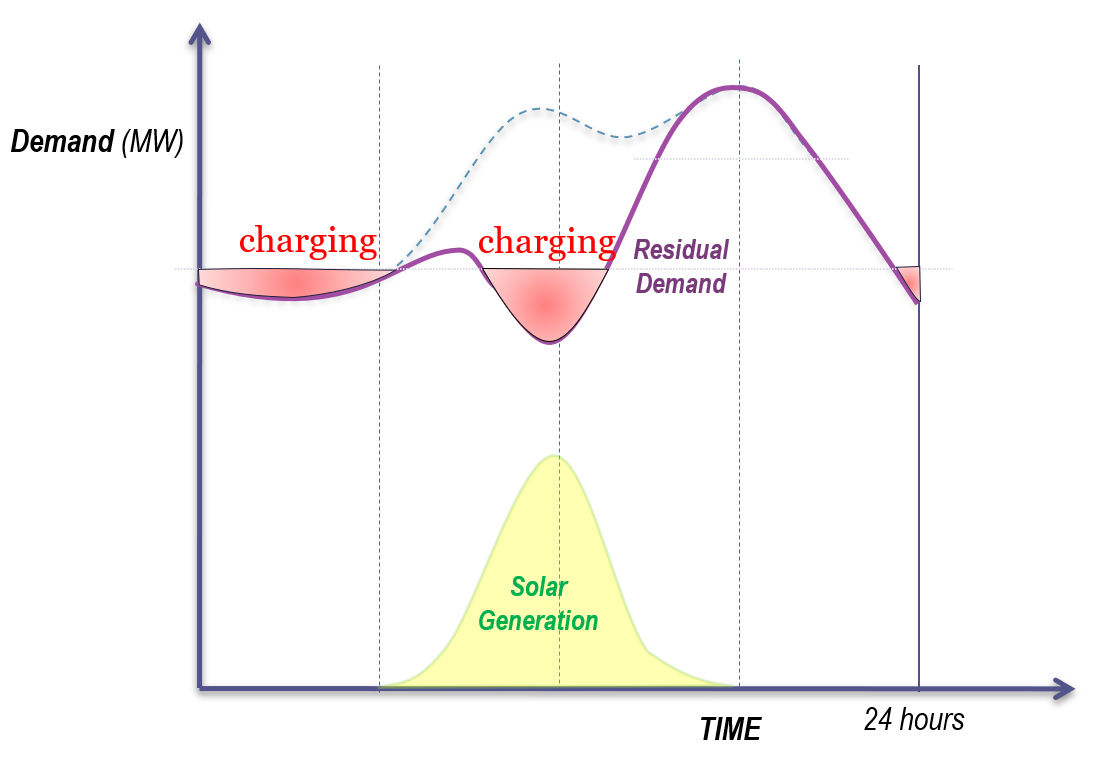
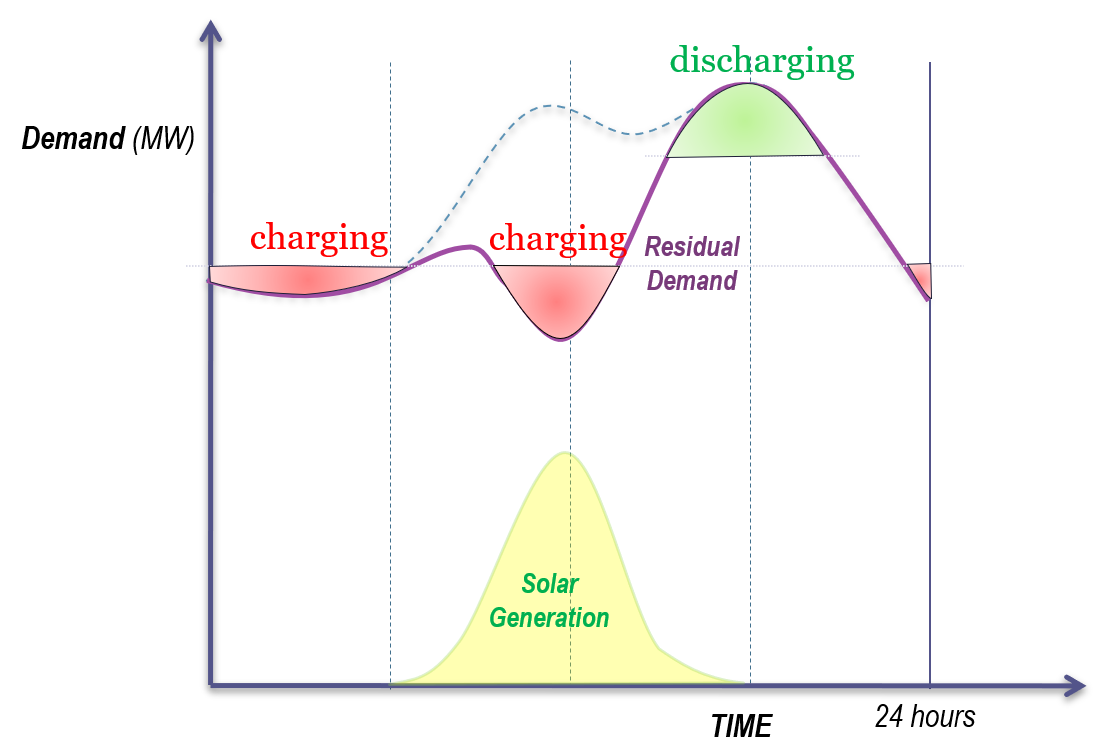
- Charging: The battery operates as a load, charging during the daytime periods when demand is low and solar energy depresses the market price.
- Discharging: The battery generates power during the evening peak, taking advantage of the high market prices.
- LDC Reshaping: BESS effectively reduces the amount of energy that needs to be produced by expensive peaking stations like diesel.